

Sprite
Slam
A speculative Sprite concept that turns one public screen and a wave of joined phones into a live shooting showdown.
Built as an internal R&D prototype, Sprite Slam explores how freshness, pace, and street-court energy can become a branded participation format. One screen calls you over. Your phone becomes the shooter. Piga shot safi, climb the board, and run it back.
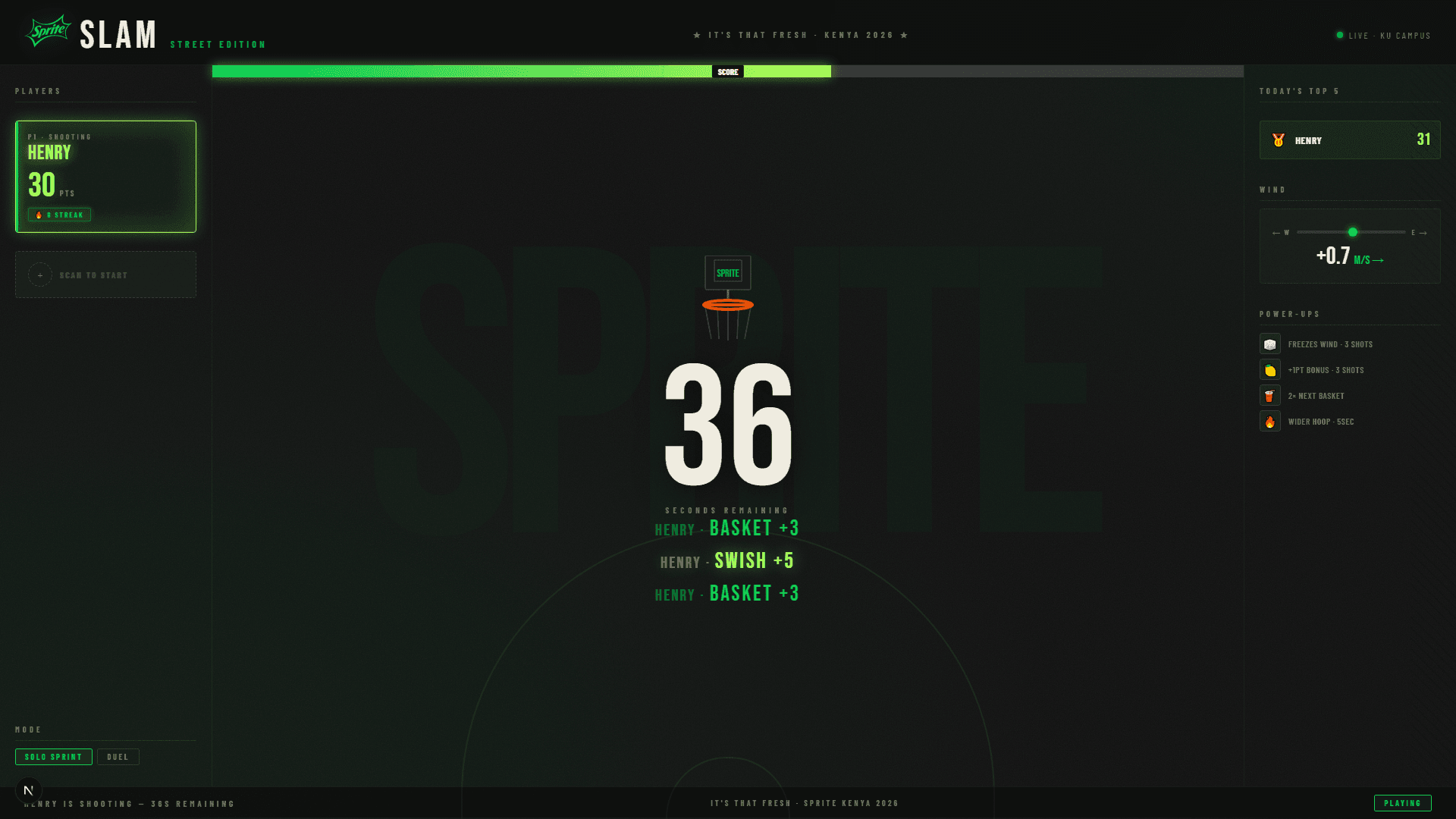
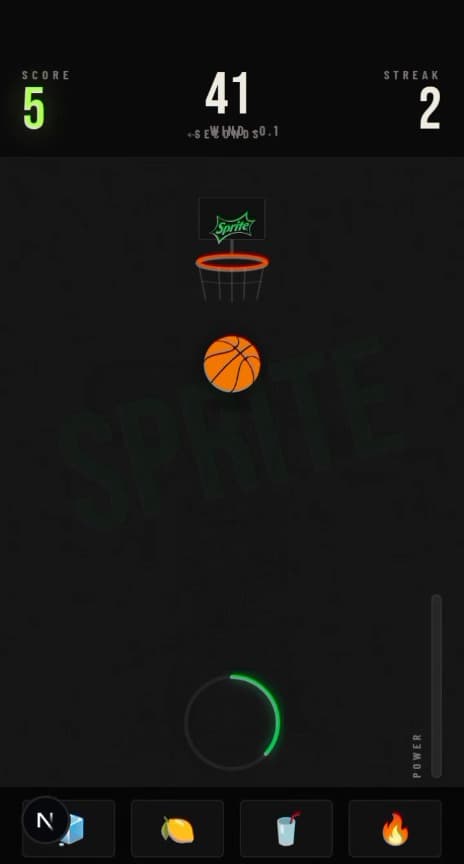
One public display drives the spectacle while every joined phone becomes a controller.
Fast enough for queues, sharp enough to feel competitive from the first countdown.
Moving conditions keep the shots unpredictable and the crowd locked in.
Score lands instantly, the board updates, and the next challenger can step in.
Not a rollout.
A pressure test.
We wanted to explore how Sprite's codes of freshness, pace, and street energy could become a multiplayer public game instead of just a visual treatment. The challenge was to make it legible from a distance, intuitive on the phone, and competitive enough to keep crowds engaged round after round.
The interesting part was not just making something that looked sporty. It was finding a mechanic that could carry Sprite's brand language properly: cool, quick, social, and just a little bit defiant.
That is why the concept leans into public score pressure, sharp visual contrast, and a game loop you can understand almost immediately from across the room.
Sprite should feel like a challenge you can step into.
Not just a green skin on a screen. A live moment with pace and pressure.
Concrete textures, court lines, punchy score states, and fast transitions give the concept an energy that feels lived-in, not sanitized.
One person is shooting, but the crowd is reading every miss, every streak, and every climb up the board. That pressure creates repeat play naturally.
The format suits malls, campus pop-ups, finals viewing zones, and brand events where people need to understand the game instantly and jump in fast.
One court.
Two interfaces.
We developed Sprite Slam as an internal concept with a public display route and a mobile join route, combining QR onboarding, live session sync, drag-to-shoot controls, streak logic, shifting wind, and a fast leaderboard loop. The display carries the hype. The phone handles the touch. Together, they turn a static footprint into something people can actually compete inside.
Live score bar, shot feed, wind, and spectator-facing game state in the middle of play.
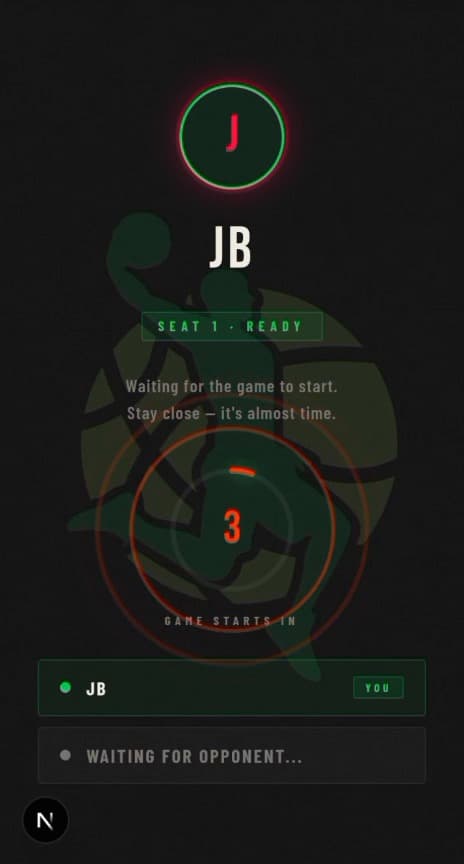
Name entry, ready state, shot control, and result feedback.
The big screen is not just a scoreboard. It is the magnet, the court, the countdown, and the thing that makes every round feel public.
The join screen stays simple on purpose: name, wait state, shot control, score feedback. No extra taps, no wasted motion.
Wind shifts, streak logic, and duel pressure turn Sprite's codes of pace and freshness into the mechanic itself.
Quick to read.
Hard to put down.
The page structure mirrors the interaction itself: a sharp join, a simple control system, and a result loop that keeps daring the next player to top the board.
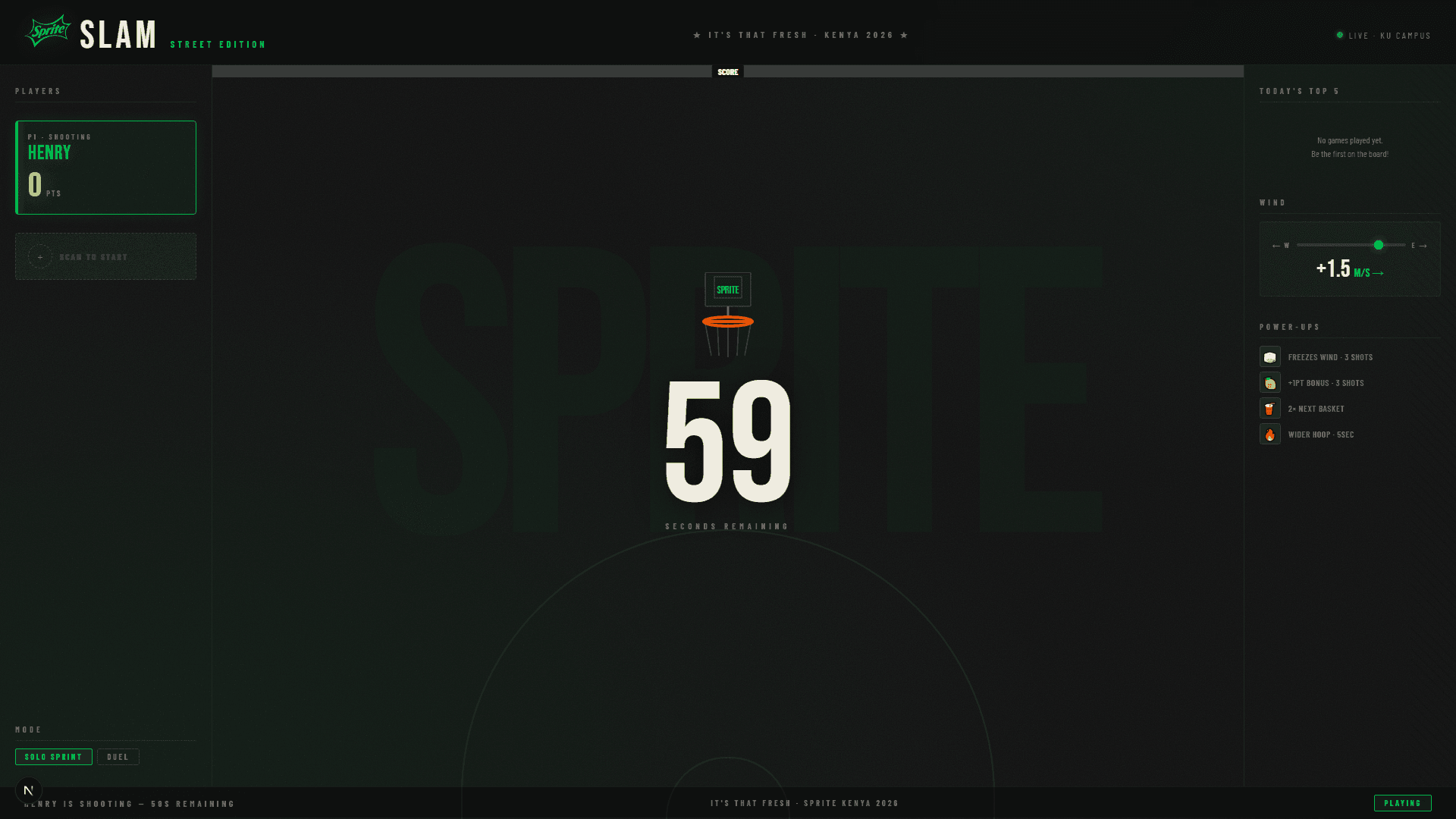
Joined Lobby
The public screen stays readable from distance while still carrying player state, QR join, countdown, wind, and power-ups.
Shot Control
The phone strips the interaction down to score, streak, hoop, and the drag-up release mechanic.
Mid-Game Pressure
The big screen keeps the pace with score feed, time pressure, and a leaderboard that updates the social stakes.
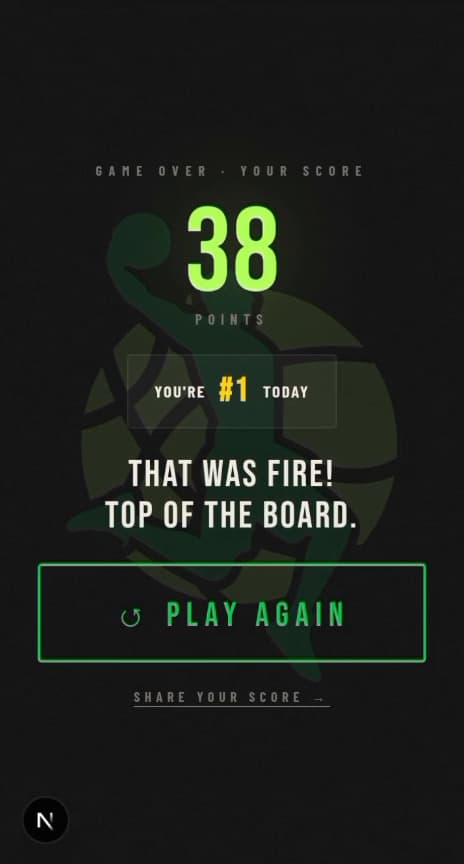
Result State
The handheld flow lands the score cleanly and invites the player straight back into the loop.
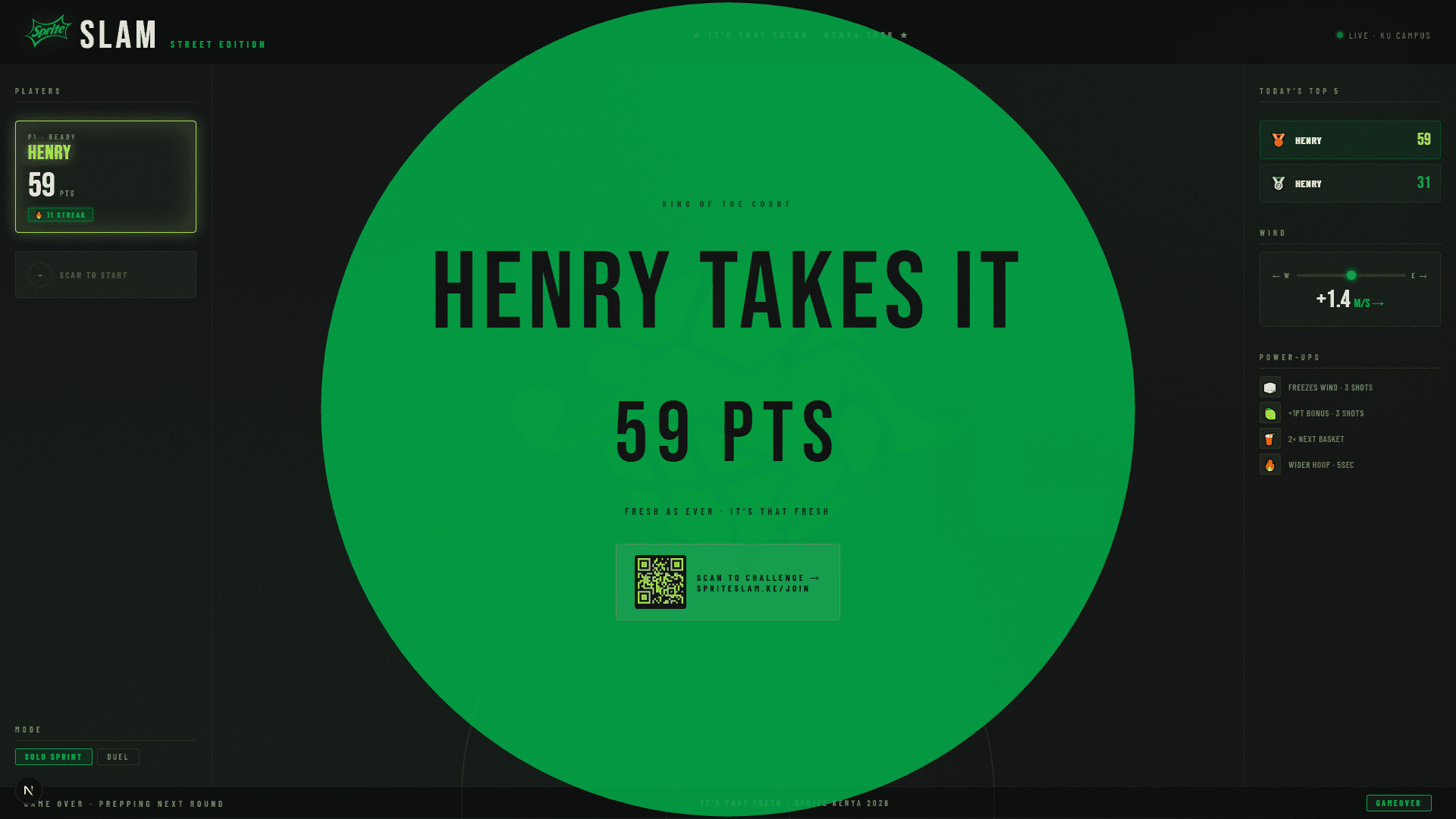
Hero Finish
The winner state is loud, branded, and public. Exactly the kind of ending that makes the next person want a turn.
Pull Up
The main display does the heavy lifting first: attract the crowd, frame the challenge, and invite players to join in seconds.
Lock In
Players scan in, enter their details, and move through a tight countdown that turns curiosity into commitment.
Shoot
The phone becomes a stripped-back shot control: drag, release, adjust for wind, build streaks, and stay fresh under pressure.
Run It Back
Results hit immediately, the leaderboard reshuffles, and the next player has a reason to believe they can do better.
Because freshness
needs motion.
Sprite already carries the codes of heat relief, pace, attitude, and youthful confidence. Basketball gives those brand cues a mechanic people understand instantly, even before they touch the screen.
For Kenya, the fit is practical as much as it is cultural. The format works in high-footfall spaces where people need to read the challenge quickly, watch it from a distance, and jump in without onboarding drama.
The ambition is simple: do not just make the screen look Sprite. Make the whole interaction feel fresh, competitive, and alive.
The display has enough movement and score drama to create a crowd, even before someone decides to join.
The phone journey stays lean so the energy is spent on the game, not on setup or over-explaining.
When the leaderboard moves in public, people immediately believe they can beat it. That is where the next round comes from.
What the concept
proves out.
How a branded visual world can shape the game mechanic instead of sitting on top of it.
How one public display and many player phones can create live competitive energy in shared space.
How short-round gameplay supports high-throughput activations without feeling throwaway.
How wind, streaks, and leaderboard pressure drive replay without overcomplicating the controls.
How internal R&D concepts can make experiential thinking tangible before a client brief even lands.
Want a brand world people can
step into and compete inside?
We design interactive formats that turn product energy into public participation, from dual-screen game systems to full experiential rollouts.